目次▾
What 'free international calls' actually refers to
When people search for "free international calls" they usually mean one of two different things, and the distinction matters:
App-to-app calls — both people have the same app installed (WhatsApp, Messenger, Signal, FaceTime). These are free because the call travels as internet data between two phones; neither side touches the traditional phone network.
App-to-phone calls — you dial a regular landline or mobile number. The call must hand off from the internet to the destination country's phone network. That hand-off is never free, even when an app hides the cost behind ads or a subscription.
If the person you want to reach is on the same app as you, option 1 is genuinely free over Wi-Fi or mobile data. If they are not — or their app is blocked in their region, or they only have a basic phone — you need option 2, and that is where real costs appear.
Why calls to real phone numbers cost something
Every country's phone network charges a per-minute fee to accept an incoming international call. These are called termination fees, and they are published by local regulators — in the US they're tracked by the FCC, in the EU by the national telecom authority. Termination fees are what a VoIP provider has to pay the destination carrier, and they vary widely: calls to the US landlines are close to a cent per minute, while calls to some smaller networks run several cents per minute.
That is why no pay-per-minute service — ours included — can legitimately offer a blanket "free international calls" product that reaches real phone numbers. Anyone advertising that is either covering termination costs with advertising revenue, subsidising short introductory credits, or restricting the offer to a small set of destinations.
従量課金
145か国以上へ発信、料金は分単位
登録は無料。開始にカードは不要です。$10をチャージして、実際に通話した分だけお支払い。月額料金やサブスクリプションはありません。
登録にカード不要 · $10チャージ · 通話したときだけ支払い
How truly-free apps make their money
App-to-app calling services are free to the caller because the business model sits elsewhere:
• Advertising inside the app, or in companion services owned by the same company. • Data you generate — contact graphs, usage patterns — monetised through advertising platforms. • Upsells to premium calling credit for when you do need to reach a phone number.
None of this is inherently bad. It's a legitimate trade: your attention or data in exchange for free app-to-app calls. You just need to know it's happening so you can compare it against paid options.
When a pay-per-minute service makes more sense
Pay-per-minute calling (what TwinPhone and similar services offer) tends to win in three situations:
• You need to reach a real phone number abroad — family on a basic phone, a hotel, an embassy, a doctor's office. • The person you're calling can't install apps on their device, or has limited data. • You want predictable, low per-minute rates with no ads and no data collection tied to the call content.
For occasional users, the smallest top-up of $10 lasts a long time — 500 minutes to the US or Canada at $0.02/min — and the balance never expires.
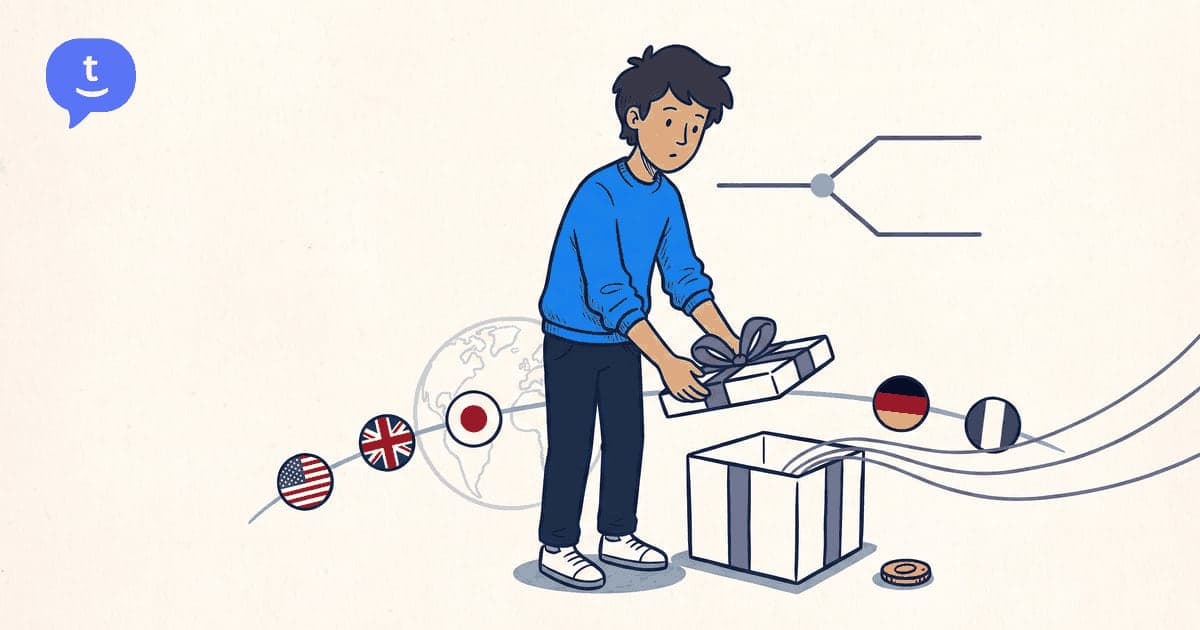
How to choose: a simple decision tree
Start with one question: does the person you're calling have the same app as you?
Yes → use the app. It's free over Wi-Fi and quality is usually fine on modern phones.
No → you need to call a regular phone number. Check the per-minute rate for the destination country on a pay-per-minute service before you dial — for TwinPhone you can use our rate calculator. For a 10-minute call to, say, an Indian mobile at $0.11/min, the total is $1.10. You load the balance you need, make the call, done.
The goal of this article isn't to convince you to stop using free apps — they're great for what they do. It's to make the trade-off visible so you pick the right tool for the call you actually need to make.
Trying TwinPhone for the first time
If you land here trying to reach someone on a regular phone number abroad, here is what a first call looks like with us:
- Sign up with an email, no credit card and no app install.
- Top up from $10 via Stripe. The balance never expires.
- Open the dialer in your browser, enter the international number, press call.
Rates are published on the rates page and updated as our carrier costs change. If the country you need isn't a match for us (too expensive at the termination layer to offer honestly), we'll say so instead of quietly absorbing it into your balance.