Sur cette page▾
La distinction importante : app à app vs app à téléphone
Avant de comparer, clarifions un point que la plupart des articles comparatifs ratent :
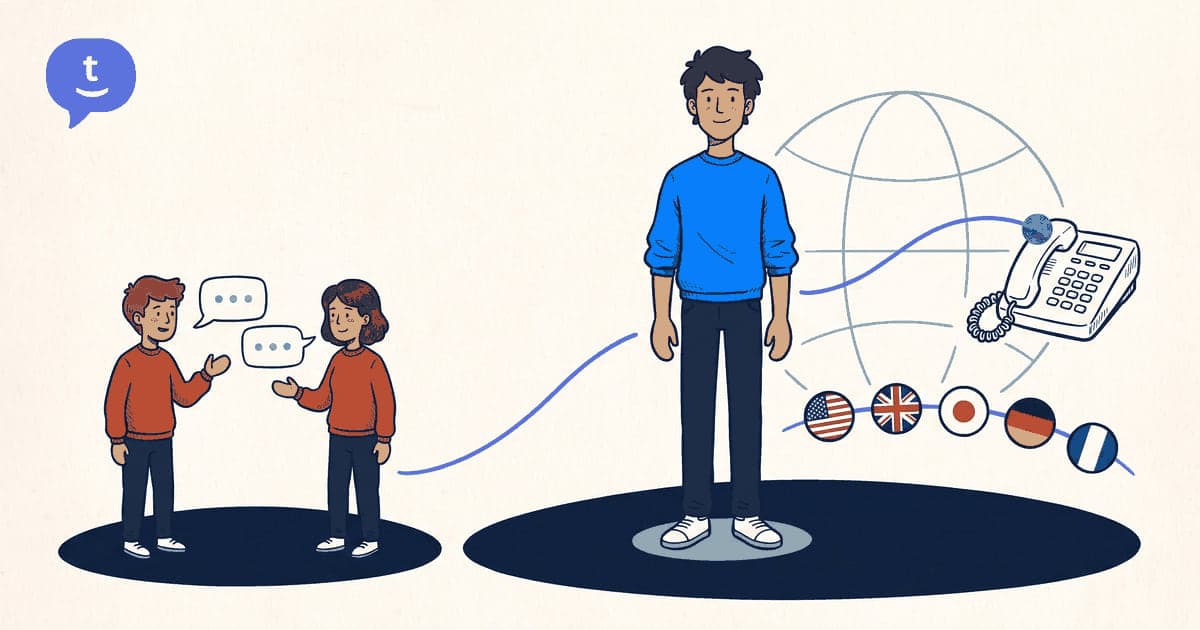
Les appels d’app à app (WhatsApp à WhatsApp, Viber à Viber) sont gratuits. Ils passent entièrement par Internet. Les deux personnes ont besoin de la même app installée.
Les appels d’app à téléphone (appeler un vrai numéro fixe ou mobile) coûtent de l’argent. L’appel doit sortir d’Internet pour rejoindre le réseau téléphonique. C’est là que le prix compte.
Si les deux personnes ont la même app, la comparaison est simple — utilisez WhatsApp ou Viber, c’est gratuit. Mais si vous devez appeler un fixe au Japon, un mobile au Brésil, ou un téléphone professionnel n’importe où — c’est un jeu complètement différent.
WhatsApp : excellent pour le chat, limité pour les vrais appels
WhatsApp est l’app de messagerie la plus populaire au monde avec plus de 2 milliards d’utilisateurs. Mais voici sa plus grande limitation pour les appels internationaux :
WhatsApp ne peut pas appeler de numéros de téléphone classiques. Point.
WhatsApp ne prend en charge que les appels app à app. Si votre grand-mère au Mexique a un fixe, ou si votre contact professionnel en Allemagne a un téléphone de bureau, WhatsApp ne peut tout simplement pas vous aider.
Avantages : appels app à app gratuits, chiffrement de bout en bout, énorme base d’utilisateurs. Inconvénients : impossible d’appeler de vrais numéros, pas de numéros virtuels, pas d’enregistrement d’appels, les deux personnes doivent avoir l’app.
Paiement à l’usage
Appelez n’importe quel pays dès 0,02 $/min
Inscription gratuite — sans carte pour commencer. Rechargez 10 $ et payez uniquement les minutes que vous appelez vraiment. Sans abonnement, sans frais mensuels.
Sans carte à l’inscription · Rechargez 10 $ · Payez seulement quand vous appelez
Viber Out : le juste milieu
Viber dispose d’une fonctionnalité appelée « Viber Out » qui permet d’appeler de vrais numéros de téléphone moyennant un coût. C’est le concurrent le plus proche des services d’appels dédiés.
Les tarifs varient énormément selon le pays : 0,01 $/min vers les États-Unis, mais 0,20 $+/min vers certains pays africains et asiatiques. La tarification n’est pas toujours transparente — il faut vérifier chaque destination individuellement.
Avantages : peut appeler de vrais numéros, tarifs corrects vers certains pays, app combinée messagerie + appels. Inconvénients : nécessite le téléchargement de l’app, tarifs incohérents selon les pays, pas d’option navigateur, fonctionnalités sociales qui encombrent l’interface, enregistrement d’appels limité.
TwinPhone : conçu spécifiquement pour les appels téléphoniques internationaux
TwinPhone est conçu dès le départ pour une seule chose : passer des appels pas chers et sécurisés vers de vrais numéros de téléphone dans le monde entier.
Tarifs à partir de 0,02 $/min vers plus de 180 pays avec facturation à la minute transparente. Aucune app à télécharger — fonctionne dans n’importe quel navigateur Chromium. Chaque appel chiffré avec TLS + SRTP. Audio adaptatif qui gère le Wi-Fi lent sans accroc.
Avantages : tarifs les plus bas vers la plupart des pays, depuis le navigateur (sans téléchargement), chiffré, fonctionne sur Wi-Fi médiocre, numéros virtuels aux États-Unis et au Canada, fonctionnalités d’équipe. Inconvénients : pas une app de messagerie (volontairement), nécessite une connexion Internet.
Comparaison directe des tarifs
Voici ce que coûtent réellement les appels vers des destinations populaires (à la minute, tarifs mobiles) :
États-Unis : WhatsApp (N/A — n’appelle pas les téléphones), Viber Out (0,01 $), TwinPhone (0,02 $). Japon : WhatsApp (N/A), Viber Out (0,15 $), TwinPhone (0,14 $). Inde : WhatsApp (N/A), Viber Out (0,06 $), TwinPhone (0,02 $). Brésil : WhatsApp (N/A), Viber Out (0,12 $), TwinPhone (0,10 $). Nigeria : WhatsApp (N/A), Viber Out (0,22 $), TwinPhone (0,06 $). Allemagne : WhatsApp (N/A), Viber Out (0,10 $), TwinPhone (0,08 $).
Le schéma est clair : WhatsApp ne peut pas rivaliser parce qu’il ne propose tout simplement pas d’appels vers des numéros. Viber Out est raisonnable pour certains pays mais plus cher pour d’autres. TwinPhone offre régulièrement les tarifs les plus bas ou proches des plus bas.
L’essentiel
Utilisez WhatsApp pour la messagerie gratuite et les appels vidéo avec des personnes qui ont aussi WhatsApp.
Utilisez Viber si vous êtes déjà dans l’écosystème Viber et que vous voulez des appels téléphoniques occasionnels.
Utilisez TwinPhone si vous appelez régulièrement de vrais numéros à l’international et que vous voulez les tarifs les moins chers, la meilleure sécurité, et aucune app à installer. Il fait une chose — les appels internationaux — et la fait mieux et moins cher que les autres.

Ressources connexes
Prêt à tester par vous-même ?
Inscription gratuite en 30 secondes. Sans carte bancaire, sans application — rechargez dès 10 $ et composez votre numéro.
Essayer